

OBJECTS OF DESIRE
Why Everyday Objects Are Becoming Fashion Accessories
From sneaker grommets to bag charms, discover why fashion is turning ordinary objects into jewelry and accessories—and what the trend says about personal style.
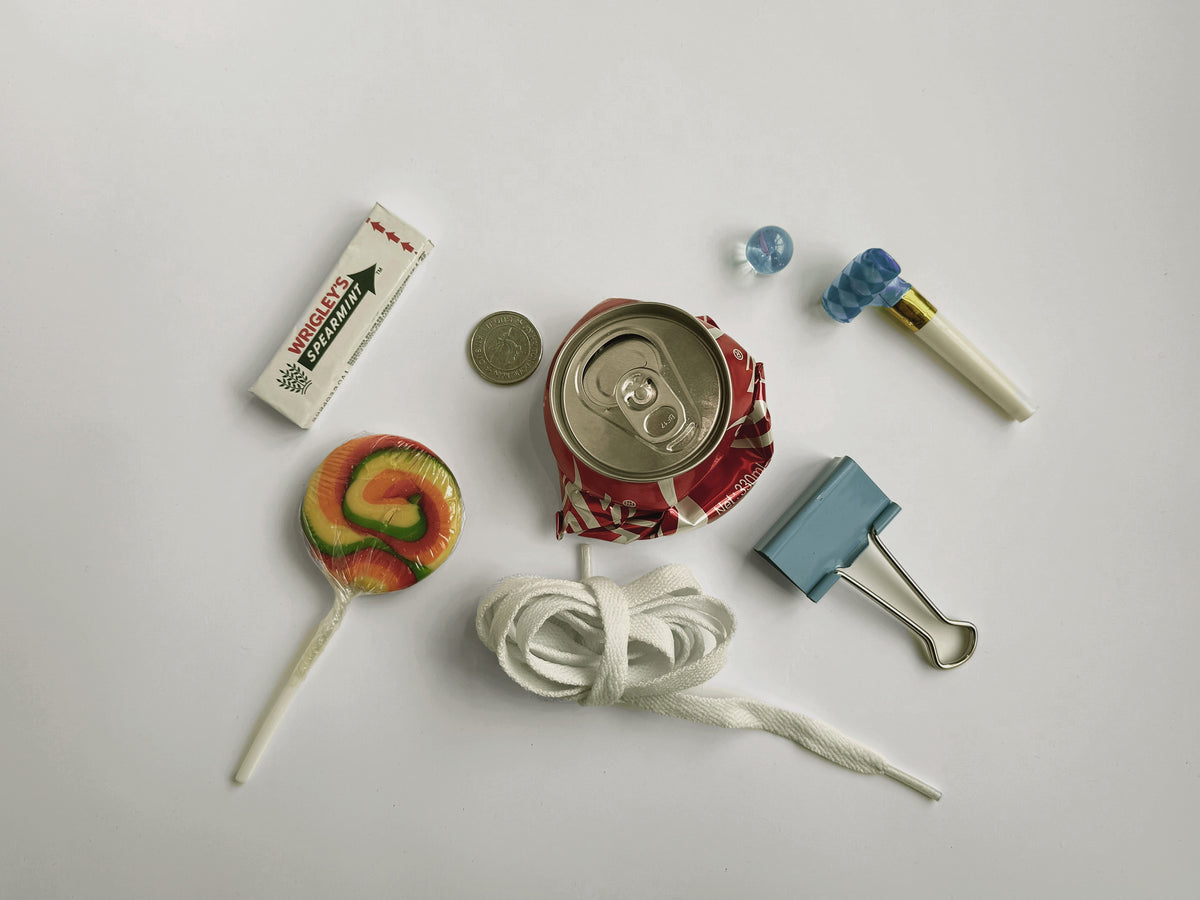
A shoelace belongs on a shoe. A metal grommet belongs around a hole. A soda tab belongs to a drink that has already been opened.
Until fashion says otherwise.
The ordinary object has become one of contemporary fashion's richest sources of imagination. Designers rework things we have stopped noticing—hardware, handles, packaging, tools—and turn their familiarity into a point of surprise. Not because function has disappeared, but because meaning has changed.
Why is fashion turning everyday objects into accessories?
There are at least three reasons. Recognition makes an object instantly legible. Displacement creates the unexpected pleasure of seeing it somewhere it doesn't normally belong. And personal expression allows people to wear an idea rather than simply a logo.
A piece of jewelry can carry a little joke, a childhood memory, a material obsession or a question about value. Its appeal becomes larger than the metal itself.
01 / The return of the playful object
Recent fashion reporting points to a more irreverent approach to accessories. Lyst's 2026 report on playful fashion describes sculptural silhouettes and objects that blur the line between art and utility. The Lyst Index Q2 2026 also connects fashion demand to cultural moments, sport and warm-weather accessories. These are different observations, not proof that any one jewelry style is universally popular.
What they suggest is more interesting: a fashion customer increasingly willing to let accessories carry personality.
02 / When utility becomes a gesture
Consider the grommet, a tiny metal eyelet that reinforces an opening on sneakers and workwear. Its circular profile is defined by a job. Remove it from the sneaker, refine its material, and place it on the ear: the shape remains recognizable, but the function becomes a gesture.
That translation is central to CUT/FOUND's GROMMET study. The Grommet Ear Cuff doesn't disguise the source. It changes the context.
03 / Why sportswear details matter
Shoelaces, aglets, mesh and eyelets are a shared visual language. You don't have to be a sneaker collector to recognize them. The forms are practical, worn daily and inseparable from street culture.
CUT/FOUND's SHOELACE study turns that familiar line into woven precious metal. The 8mm Filigree Shoelace Ring uses fine silver threads to reimagine a common object through a demanding technique. It is neither an imitation shoelace nor conventional jewelry: it lives somewhere in between.
04 / Accessories as personal punctuation
Fashion's recent interest in charms shows how small objects can express identity. In street-style reporting on charms worn at the waist, Vogue documented the migration of decorative objects from handbags onto belts and clothing. The precise object may change; the desire to customize stays.
This is why a recognizable material detail can communicate more than ornament alone. A scissor, a tab or a small piece of hardware becomes a way of saying something without spelling it out.
05 / The relationship between irony and craft
Novelty has a short shelf life when it offers only a punchline. Craft can give the idea staying power. A playful source object becomes more compelling when its new construction deserves examination—how it is woven, soldered, polished, balanced and worn.
In CUT/FOUND's practice, Chinese silver filigree offers this second layer. A motif borrowed from streetwear can meet a metalworking tradition rooted in an entirely different history. Both stories remain visible.
06 / The pop tab as a small design thesis
A soda tab is a shape people recognize but rarely admire. Its loops and apertures are already graphic. Reimagining it as an adornment changes what the eye values. The Pink Opal Puka Soda Tab Necklace and Beer Tab Bottle Opener Pendant Necklace offer two interpretations of this everyday silhouette.
How to wear object-inspired jewelry without looking costume-like
Start with clothes that give the object room: a white shirt, dark knit, tailored jacket, relaxed denim. Choose one expressive piece as the focal point rather than layering several literal references. Pair polished hardware with softer textures, or sculptural metal with understated silhouettes. The objective is not to dress as the source object, but to let it interrupt the outfit.
For smaller experiments, read How to Wear Ear Cuffs Without Piercings. For a different conversation between material and style, explore How to Mix Silver and Gold Jewelry.
What comes next for the everyday object?
Predictions are less interesting than the act of noticing. The next accessory idea might already be on your desk, in your pocket or under your feet. Its value is not waiting to be discovered in a trend forecast. It is waiting to be seen differently.
OBJECT ARCHIVE / THE CURRENT — CUT/FOUND
