
Ming & Qing courts
Imperial patronage brought skilled makers together. Fine wire became regalia, ornament and a language of status.


CUT/FOUND — A STUDY IN SILVER
A delicate line. An extraordinary accumulation of time. The living art of Chinese silver filigree.
Enter the studySilver filigree vessel / CUTANDFOUND craft archive
01 / A living art
In Chinese filigree, metal is treated as a line: drawn fine, twisted, curved, woven and joined. Repeated gestures build openwork surfaces of extraordinary delicacy.
Filigree inlay flourished in the Ming and Qing courts. Its knowledge has travelled through generations of artisans and apprentices.
In 2008, filigree inlay was included in China’s national intangible cultural heritage list.
For CUTANDFOUND, the inheritance is a way of seeing: the possibility of making something sculptural from something almost impossibly fine.
Read the heritage recordMing & Qing courts
Imperial patronage brought skilled makers together. Fine wire became regalia, ornament and a language of status.
Beyond the court
By the nineteenth century, export silver carried intricate wirework into cases, boxes and objects for daily use.
A living inheritance
National heritage recognition in 2008. Today, CUT/FOUND explores the craft through an everyday silhouette.
02 / Studies in intricacy
From an emperor’s gold crown to an antique silver card case. Follow the wire from the whole object into its smallest turns.
I / Imperial precision
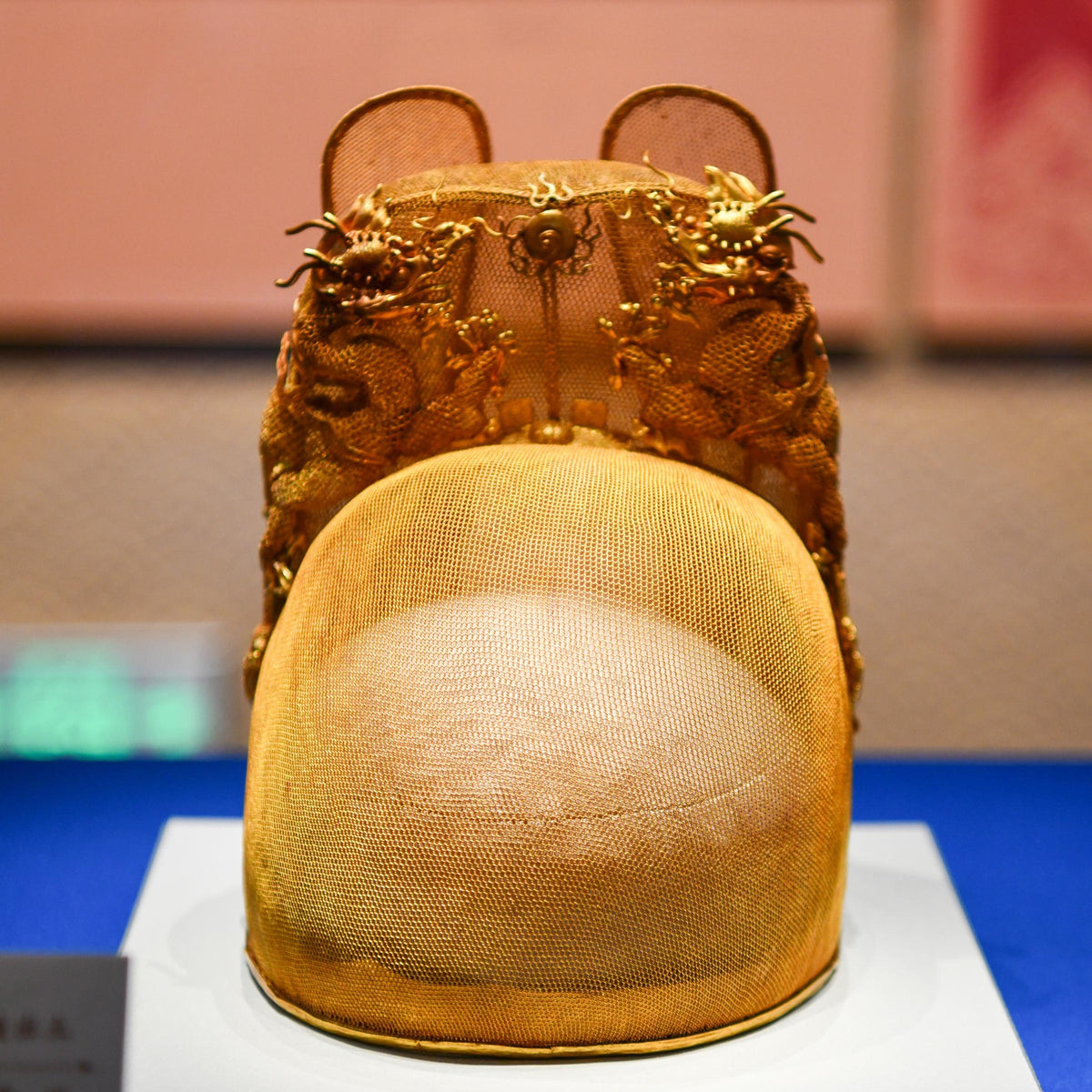
The Wanli Emperor’s gold winged crown brings the precision of Ming court craftsmanship into view. Fine gold wire forms a translucent mesh, crowned by dragons and two upright wings.
Excavated from Dingling, the crown makes a precious material feel almost weightless. Its richness lies as much in the handling of each fine line as in the gold itself.
II / The wirework
Look closely at the crown’s curved front. The surface resolves into a dense rhythm of fine gold wire, with tiny openings that let light through.
From a distance, a royal silhouette. Up close, an accumulation of small, precise gestures. This is the scale at which the craft reveals itself.
III / An antique in detail
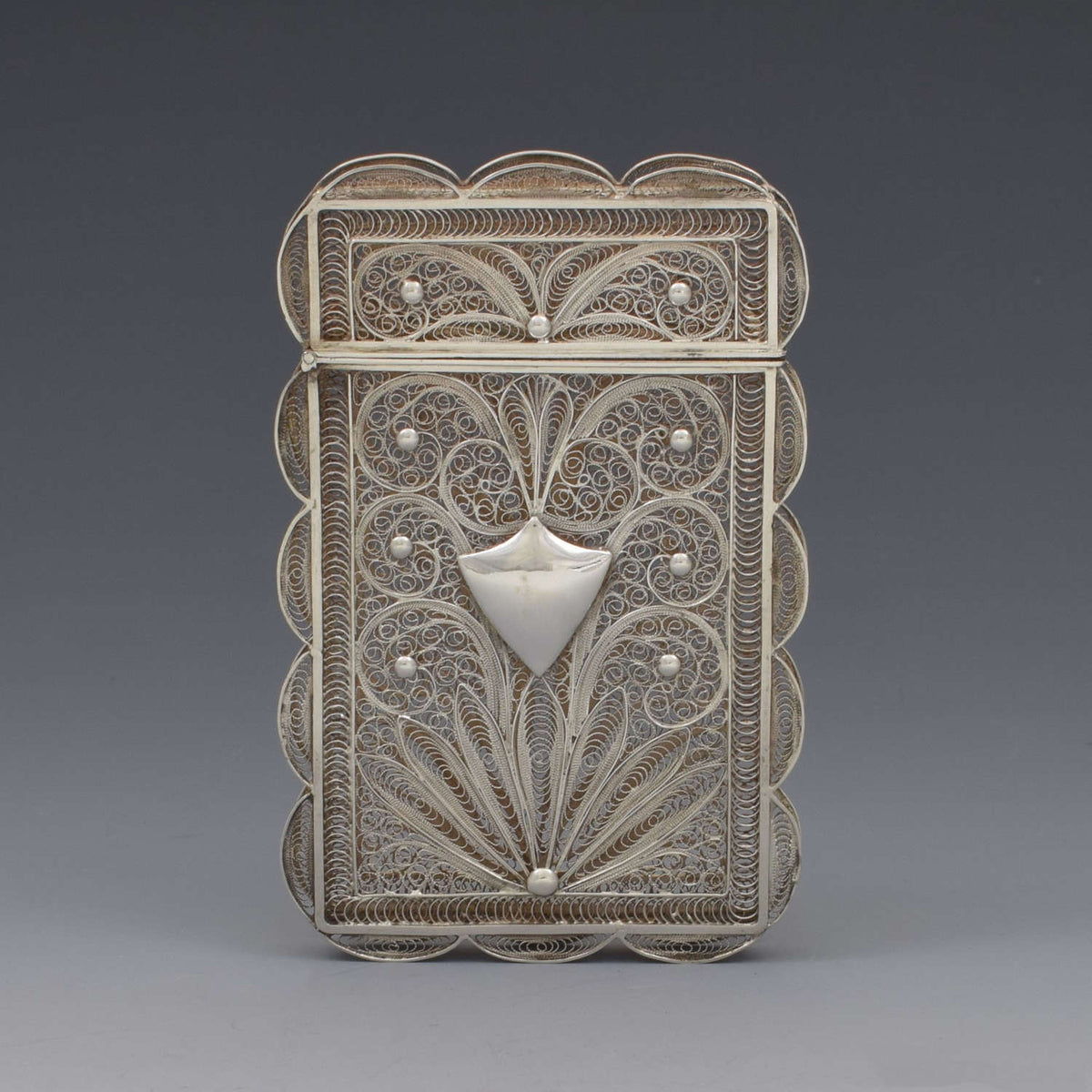
In this Chinese export card case, dated around 1880, silver wire traces flowering plants, leaf rosettes and scalloped edges. Larger stems hold a second, finer world of curls and loops.
An everyday object becomes a miniature work of art. Follow the open spaces between the wires: the pattern is built from line, rather than a solid sheet.
IV / A world in miniature
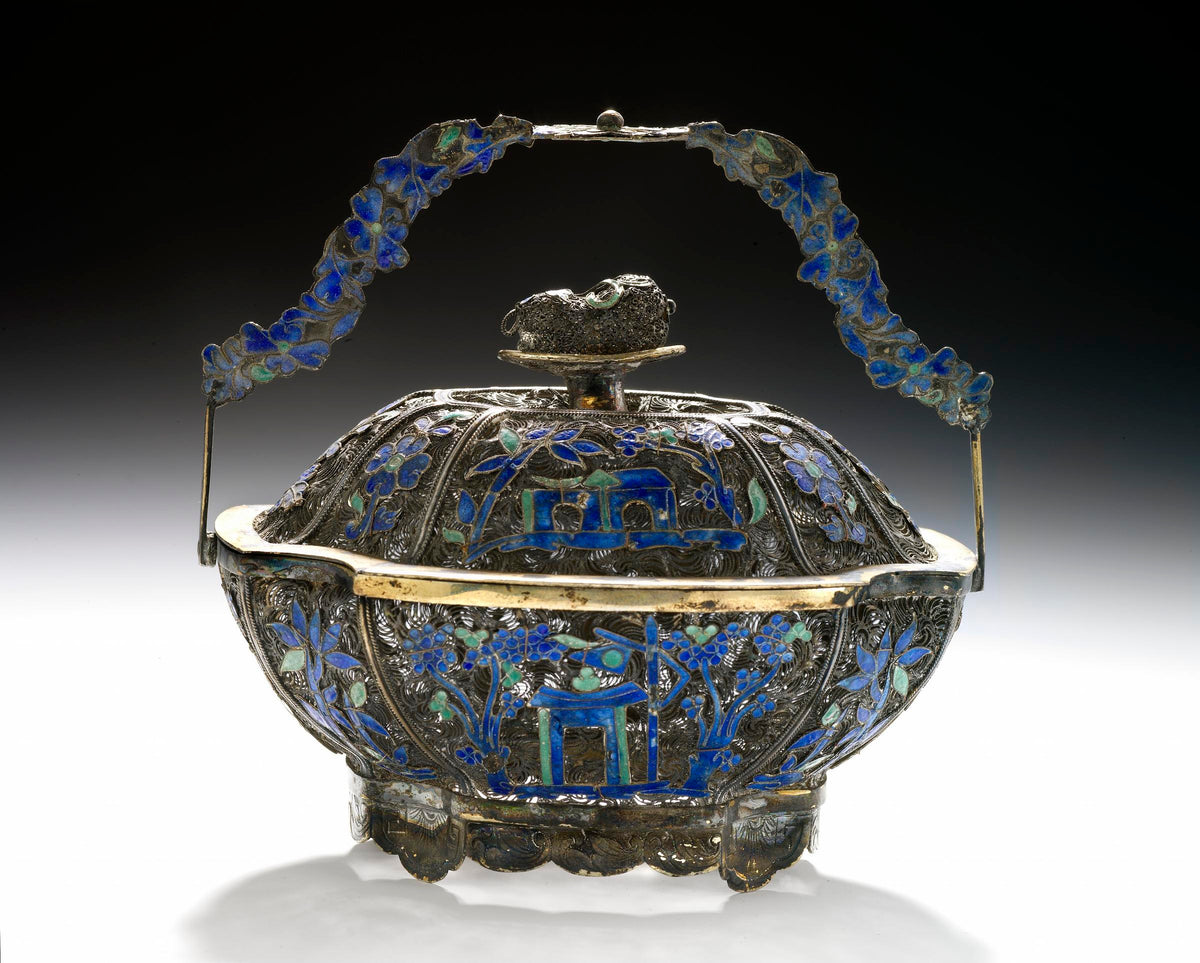
A basket becomes a small landscape. Flowers and architectural motifs sit among silver wirework, their blue and green enamel held against a lace-like surface.
This Chinese filigree basket, preserved in the Smithsonian collection, shows how a modest object can hold an extraordinary density of detail.
V / Strand by strand
Look between the coloured motifs. The silver surface is composed of tiny turns, loops and repeated lines. Detail continues where the eye might otherwise stop.
That relationship between a single strand and a larger rhythm is central to filigree—and to the way we approach our own woven silver.
VI / Time made visible
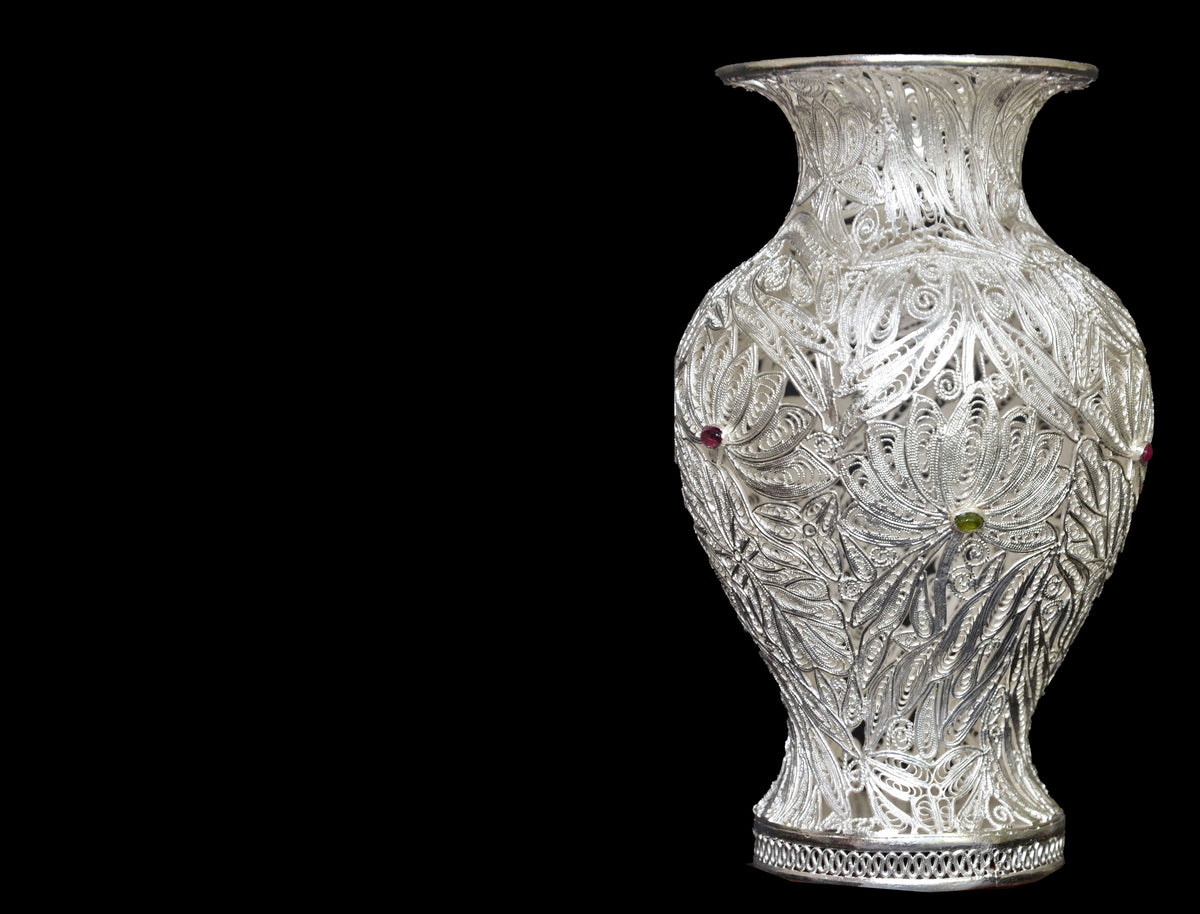
In this vessel from our craft archive, silver wire becomes petals, leaves and openwork volume. The surface holds space as carefully as it holds light.
Eight months of work went into this sculptural piece. It offers a different measure of preciousness: the accumulated skill and time within the object.
03 / The intelligence of the hand
Drawn fine. Rolled under wood. Woven one strand at a time.
Three gestures transform silver into a surface with the delicacy of fabric. Each depends on an artisan’s feel for pressure, tension and rhythm.
Through tens of preparation and drawing steps, silver is brought down to a fine, even thread—just 0.3 mm in diameter.
Each pull refines the line. Its consistency is the foundation for everything that follows.
A wood block presses and rolls over the straight silver wire. The artisan’s controlled, repeated movement turns the smooth line into a finely twisted thread.
Pressure and rhythm shape every turn. Too much or too little, and the thread loses its evenness.
The twisted threads are guided into one another by hand, one at a time. Fingertips turn, feed and settle each strand into the growing mesh.
Line becomes surface. The pattern emerges slowly, through the careful placement of every thread.
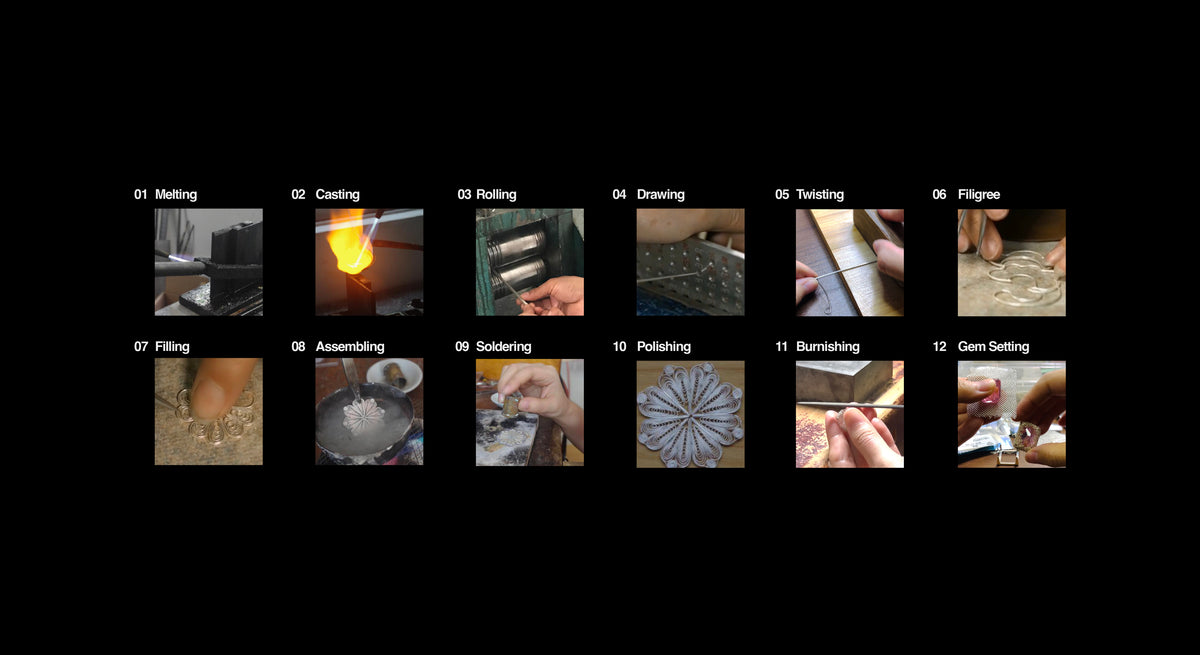
From wire preparation to assembly and finishing: techniques from the CUT/FOUND filigree craft archive.

Silver filigree, hand-woven by master artisan / CUT/FOUND Atelier
04 / A contemporary translation
Where traditional filigree shapes wire into delicate florals and scrolls, CUTANDFOUND redirects that mastery toward the industrial.
We deconstruct the structural logic of a standard nylon shoelace—how raw synthetic fibers are densely woven to form a functional fabric—and recreate that exact anatomy using fine silver thread. The ornament becomes the structure itself, carrying the patience of heritage craftsmanship into the raw reality of the everyday.
Twenty strands form our 8mm weave; twenty-six form the 12mm. The wider surface asks for more strands to prepare, guide and weave—and more time at the bench. Length, form and finishing also shape the making of each piece.


